
Ground truth from your codebase
See feature delivery, AI impact, technical debt, and delivery risk – derived directly from commits and pull requests. No tagging. No overhead.
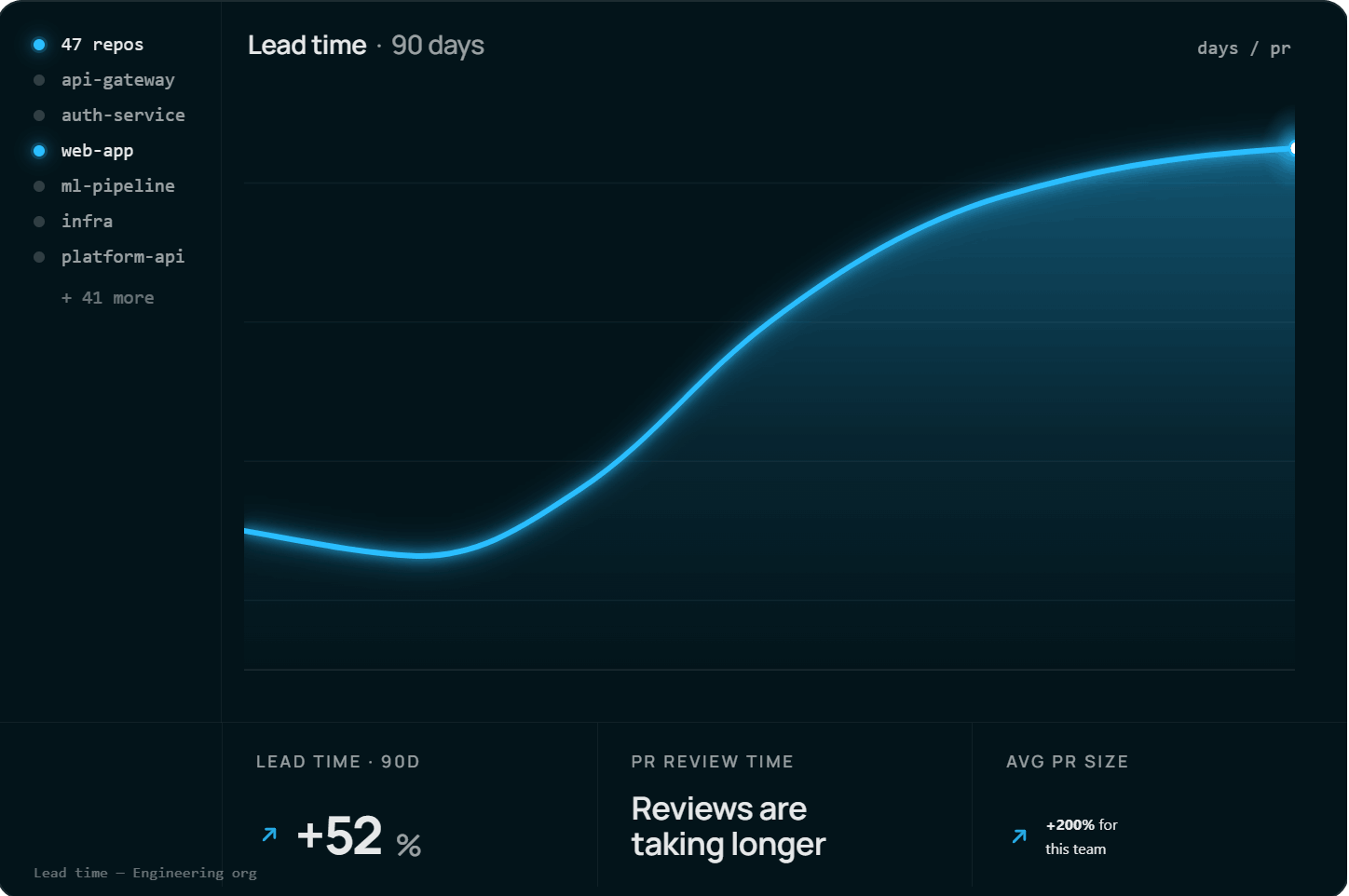
“Flux was a cheat code. I could finally see what was really happening across the codebase.”
Mike Garon, VP of Engineering at Cobalt

Beyond tickets:
visibility from the code itself
Planning tools show intent. Flux shows reality. Commits, pull requests, and repo activity give you a clear view of actual work.

Ground truth from code
Insights come directly from commits and pull requests versus plans, estimates, or reports.

Zero operational overhead
No tagging, no workflow changes, no overhead. Flux adapts to how your team works.

Built for AI
Designed for the speed, volume, and complexity of AI-accelerated development.
63% of engineering leaders report that they can’t stay on top of week-to-week code changes.
Source: Flux/Dimensional Research, AI Code Generation Reality Check
What Flux surfaces and why it matters

Work mix and momentum
Separate feature delivery from maintenance, refactoring, and hidden work.
See the real split between features and maintenance.
Catch momentum slowdowns before they hit retrospectives.
Surface shadow work that never appears in planning systems.

AI impact and strategic clarity
Understand how AI is changing the output, quality, and dynamics of your software development organization.
Track AI shifts work patterns and output quality.
Uncover hidden churn, review burden, and rework.
Prove AI ROI from code, not estimates.

Team dynamics and contribution patterns
See who’s carrying load, where mentorship is happening, and where knowledge and effort is concentrated.
Identify real contribution patterns versus relying on surveys or assumptions.
//
Understand cross-team dependencies and knowledge flow.
Catch burnout risk before your best engineers are overloaded.
Code quality and risk signals
Monitor quality and risk across your entire GitHub estate before issues become incidents.
Surface brittle code, hotspots, and accumulating technical debt.
Catch quality degradation before AI-accelerated code compounds the risks.
Monitor architecture, dependencies, and security vulnerabilities estate-wide.
How Flux turns code activity into leadership clarity
Simply connect your repos. Flux does the rest.

Connect your GitHub Cloud repositories
Flux ingests all commit, pull request, and repository activity across your estate. No ticketing changes. No workflow setup. No agent to deploy.
Historical data backfills automatically, so you start with context, not a blank slate.
Connected repositories
127 repos

frontend-app
1,245 commits 89 PRs
backend-services
2,103 commits 142 PRs
data-pipeline
846 commits 67 PRs
mobile-ios
1,532 commits 104 PRs
infrastructure
654 commits 45 PRs
Work classification
Last 90 days features, bugfixes, refactor, maintenance
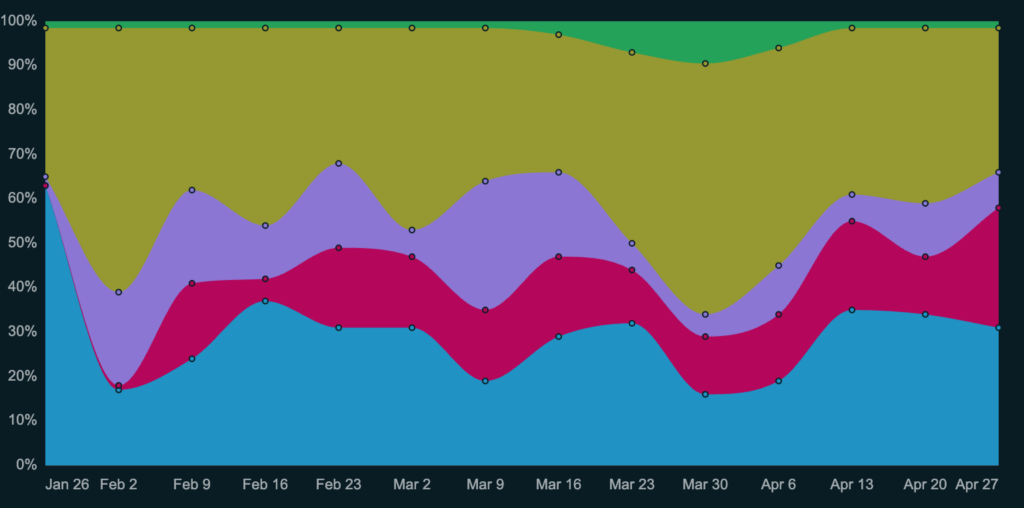

Flux analyzes the engineering work
Flux identifies and classifies work across your codebase: features, maintenance, refactoring, AI-generated code, technical debt paydown. No tagging required.
As data accumulates, signal quality sharpens and intelligence gets more precise over time.

Flux surfaces leadership-level intelligence
See progress, work mix, team dynamics, and emerging risk clearly. Course-correct early, defend roadmap tradeoffs, and walk into executive conversations with evidence instead of estimates.
Codebase insights
Strategic summary of recent team performance
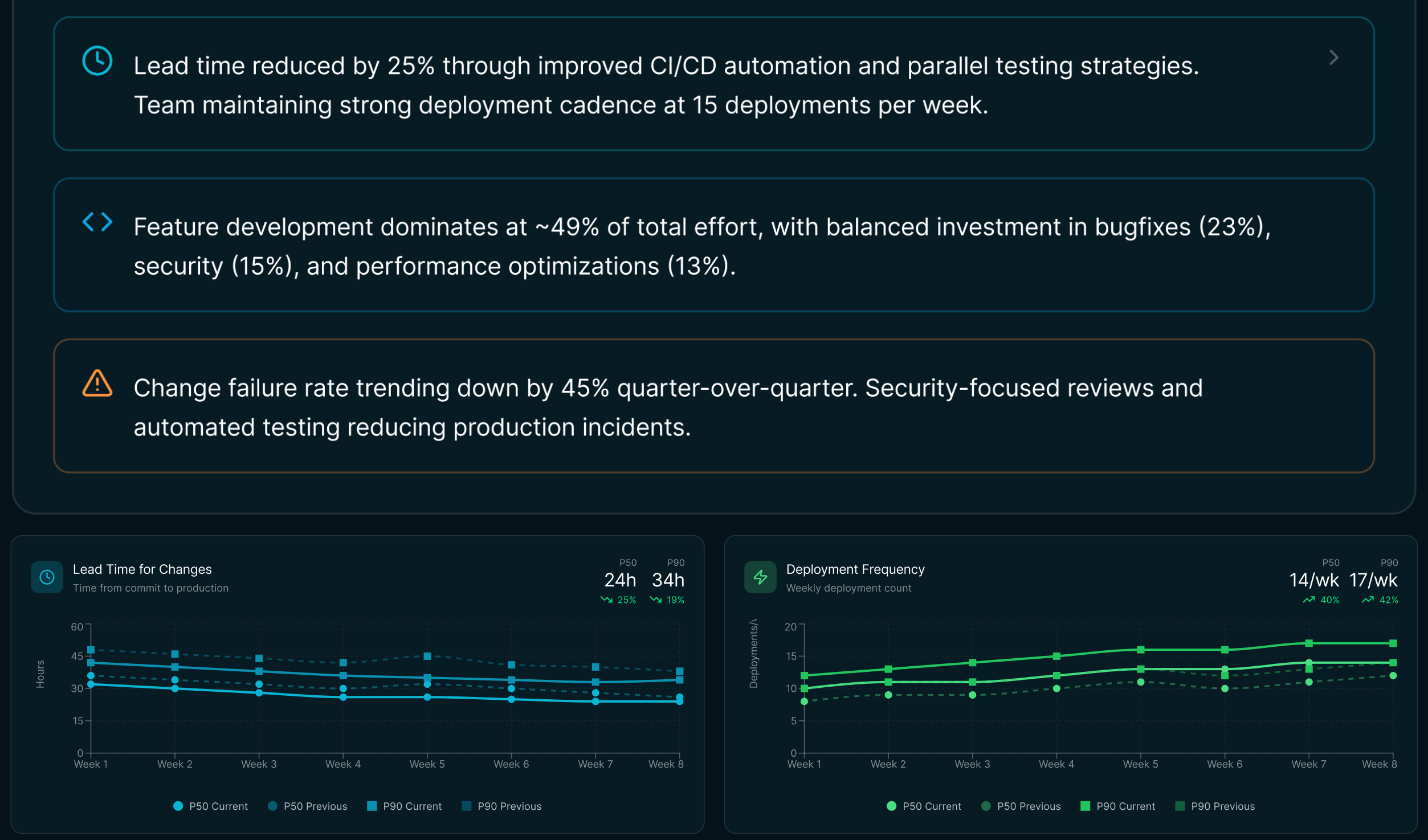
No tagging. No behavior change. Zero operational overhead.
From codebase to boardroom
225
GitHub repositories
Q4
Board-deck centerpiece
1
Engineering offsite slide
“Flux produced the single most compelling graph in our Q4 board report. It showed how we shifted from maintenance to meaningful feature delivery.”
— Mike Garon, VP of Engineering at Cobalt
Security & Compliance
Enterprise-grade trust, built in by design
Flux is built with enterprise-grade security and compliance as a foundational principle, not an afterthought.

Security-first architecture
Flux treats your source code as sensitive IP — minimizing exposure, eliminating unnecessary data retention, and giving you control over what Flux can access.

No operational exposure
Flux reads repository activity. It doesn’t write to your repos, execute code, or require elevated permissions. No new attack surface.
Validated by enterprise security teams
Flux has passed security reviews from global enterprises. Your security team can move forward without starting from scratch.

Transparent security documentation
We provide full documentation of our security practices, data handling, and compliance posture so your team can complete their review with confidence.
Get hands-on with code-first visibility in seconds
Explore a pre-populated Flux environment built on real open-source data. No GitHub login, no repo connection, no setup required.
What Flux gives you:
Distinguish between features and maintenance
See how work patterns shift as AI adoption grows
Gain leadership visibility from code, not tickets

The Details
Frequently asked questions
Q.01
What data does Flux read?
Commits, pull requests, and code structure from the GitHub repos you connect. Your code is never used to train models or shared with other customers. Analysis runs in ephemeral environments.
Q.02
How long does setup take?
Under five minutes to connect. Your first estate-wide read is ready within the hour. And Flux can backfill up to twelve months of history on request.
Q.03
Is this for managers or developers?
The visibility Flux provides engineering leaders means your developers spend less time on status updates and manual reports, because leaders can answer those questions directly from the code.
Q.04
Do we need to change how we work?
No. Flux requires no tagging, no ticket hygiene, no workflow enforcement.
Q.05
How does Flux handle AI-generated code?
Flux is built for AI-accelerated engineering. It tracks commit activity alongside quality, churn, and risk signals, so leaders can see whether AI adoption is driving real progress or just increasing output volume.
Q.06
How is Flux different from Jira-based intelligence tools?
Those tools report on intent and self-reported status. Flux reports on ground truth: what actually changed in the system, backed by the code itself.